What do people love most about CRPGs? Many people would name various roleplay opportunities and choices. Others love character-building or tactical battles. But for most people, a stand-out feature is the opportunity to build romantic relationships. People love vibrant, lively characters: getting to know them, shipping, and making headcanons. In general, people enjoy playing this game of love.
As a CRPG developer, we put a lot of effort into the narrative side of the game. But how is it made? Today, we’ll take a look behind the curtain with the help of our two experienced narrative designers and studio veterans: Nika Alborti and Arseniy “Thai” Krymov.
How do your favorite romantic interests, and the quests surrounding them, come to life? How do you make a love story believable? Is it possible to write about love relationships without being cringy? There's a lot of interesting and unexpected stuff behind the scenes, and our narrative designers agreed to take us there and show us their writing process. Let's jump right into it!
Warning: watch out, spoilers ahead! If you haven’t played Pathfinder: Wrath of the Righteous and Pathfinder: Kingmaker, move on at your own risk.
The Technical Side of Things
The First Steps
A narrative designer's job isn't just creative all the way, it also involves a fair amount of planning and calculation. Games are complex mechanisms, especially CRPGs with a lot of variation and choices. So, you can't just pick a keyboard and start writing companions. First, you need to create a roster, which is a brief list of all the available companions with some details.
We make it for each new game at the early stages of production. The job is tricky, as there is always a ton of things to take into account:
-
Companions’ alignments should be balanced. Any player, whatever moral convictions they’d love to roleplay, should be able to gather the whole party and not be left alone.
-
Mechanics. We need companions with different classes, playstyles, abilities, etc.
-
They should cover all the major factions that are involved in our story. They would support various cultural and political forces presented in the setting. It’s important because our companions are one of the main gates through which the player gets to know this world.
-
Different specifics of a particular game. For example, in Pathfinder: Kingmaker, we had Kingdom management mechanics, so we also got to think about the role each companion would take in the royal council.
As you see, the character roster implies complex combinatorics where many parameters need to be balanced. First, we sort out the left part of the table: who the character is, their gender, faction, and alignment. After that, we move on to the right column and write a short character pitch. Usually it’s not even a story, but more like a general feeling. For instance, this is a “Comic relief character” is enough description to start.
And here we finally move on to the romances. In addition to the mentioned parameters, at the end of the character pitch, some of the characters get their own brief “romance type”. For example, for Arueshalae, it is “a shy girl”, while Daeran is “a charismatic bitch”.
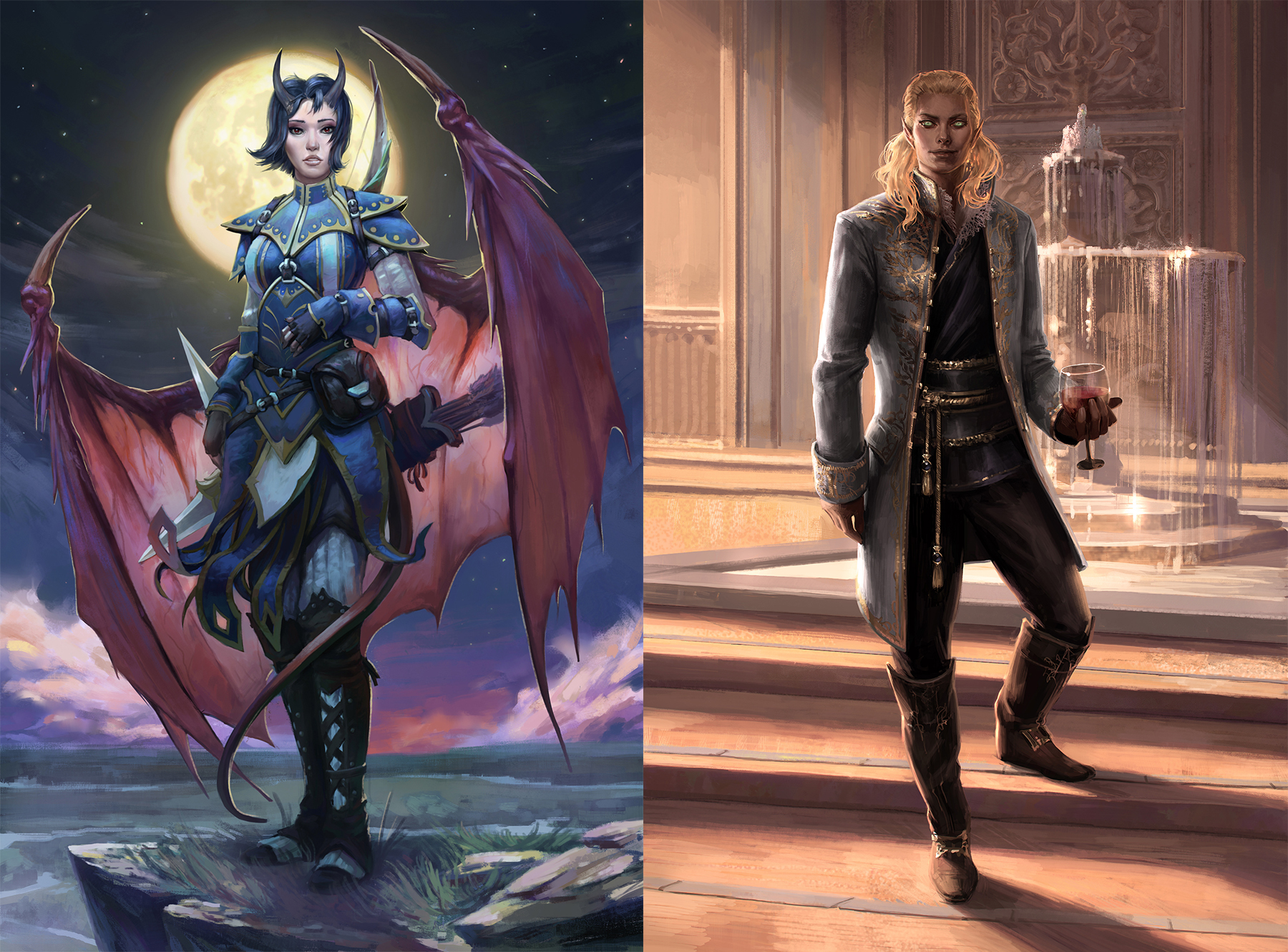
While putting together a roster, we roughly estimate what kind of romances we'll have, how they'll play out, and who they will be aimed at. At this stage, romances are laid out roughly, because little can be said yet about how the game will unfold. For example, we added Wenduag quite late in production. Because of that, we had to reshuffle the roster and figure out what to do with it. We've had situations where we added new romanceable companions during the Kickstarter campaign, and we’ve had to rethink them all over again. We've also had moments where we simply realized along the way that one companion was more appealing for romance, and another less so. Sometimes new decisions about the romance roster are made quite late in the game, and everything can change.
And only then, after we've built the roster, written most of the game, and rebuilt the romance roster again, we finally move on to designing romance questlines. “Why is this being done so late?” you may ask. That is because a romance is like an ivy twining around a fence. It grows on top of all other game events, as well as the established plot and companion stories. It must fit in correctly. There is no point in starting to build it too early; it won’t work out.
While there are some authors out there who like to adjust a companion to a romance, we deeply believe it shouldn’t be done this way—you’d get a bad companion and a bad romantic line. In Owlcat, we create a character first, and then we further develop them within a romance.
How Does a Romance Unlock and Progress
Romances are one of the most complicated types of content in our games. They stretch from the prologue to the very end, with numerous variables and complex internal mechanics. What does a romance consist of mechanically? What types of elements are there?
It is important to mention that each of our games has its own unique features and inner mechanics. It may depend on the game itself and what we're trying to do with romance in it. For example, Kingmaker used "affinity counters" and required that you take the character you romance into your party a lot, while Wrath of the Righteous did not. However, the elements and principles mentioned below are common to most of our projects.
Warning, many terms ahead!
First off, there are Unlocks. An unlock is the moment before a romance begins. It’s that one interaction with a companion when the player has an opportunity to initiate a romance or conform to a companion's initiative.
Surprisingly, an unlock is not the same as flirting! It is a moment, when either the player first shows interest in a companion, or vice versa. Such a scene may not be romantic at all. We sometimes get bug reports, in which players complain “I did not flirt with the companion, and suddenly they make a move on me”. It happens because you triggered the romance in one way or another—by interacting with the companion or doing something they find hot. (Even if it's not done in interaction with said companion specifically. Maybe they like your way of ruling or slashing monsters!) But worry not, because unlocking also doesn't mean you've started a romantic relationship. It's the moment when you start noticing your companion, or when a companion starts to notice you. You’ve only unlocked this branch of the plot. There is a possibility of a romance that needs to be developed further.
Unlocks come in a variety of forms. For example, they can be instantaneous (choose a specific dialogue option, and the romance begins), or they can be cumulative (you flirt a lot, and then the romance is considered started). It can be anything, and it varies greatly from companion to companion.
After the start of the romantic branch (not the romance itself, but the long chain of events that can lead you to the romance), we begin to experience events.
Events are the main content of a romance. They are mostly dialogues and cutscenes, but can also include different things—for example, Lann's playful duel between the player and a companion. Or it may be some daring joint foray with the companion to hack enemies to pieces. In short, these are certain events related to the romance, either ongoing or merely possible.
It varies from game to game, but we generally divide these events into “mandatory” and “optional.”
Mandatory events intercept the player, and they can't skip them (unless they decide to end the romance, which is always an option).
Optional events are unlocked in various ways; they can occur on different maps, when a player brings a companion along in a party, or when the player makes certain decisions. “Optional” means they're not required to advance the romance. However, both types are very important.
The mandatory events are usually needed to ensure you won’t skip your romance content for some random reason. For example, maybe you completed quests in a strange order, or decided not to bring your love interest with you, or something else unexpected happened. Whatever you do, the mandatory events give you guaranteed content that no one can take away from you. While optional events are a reward for exploration, for choices, for bringing your love interest along with you in the party and getting a lot of content with them.
It might seem better to put everything on the main path. Or the other way around—to put everything in the sidequests. But no, balance is actually very important here. It encourages different types of players and creates a more enjoyable feel to the game.
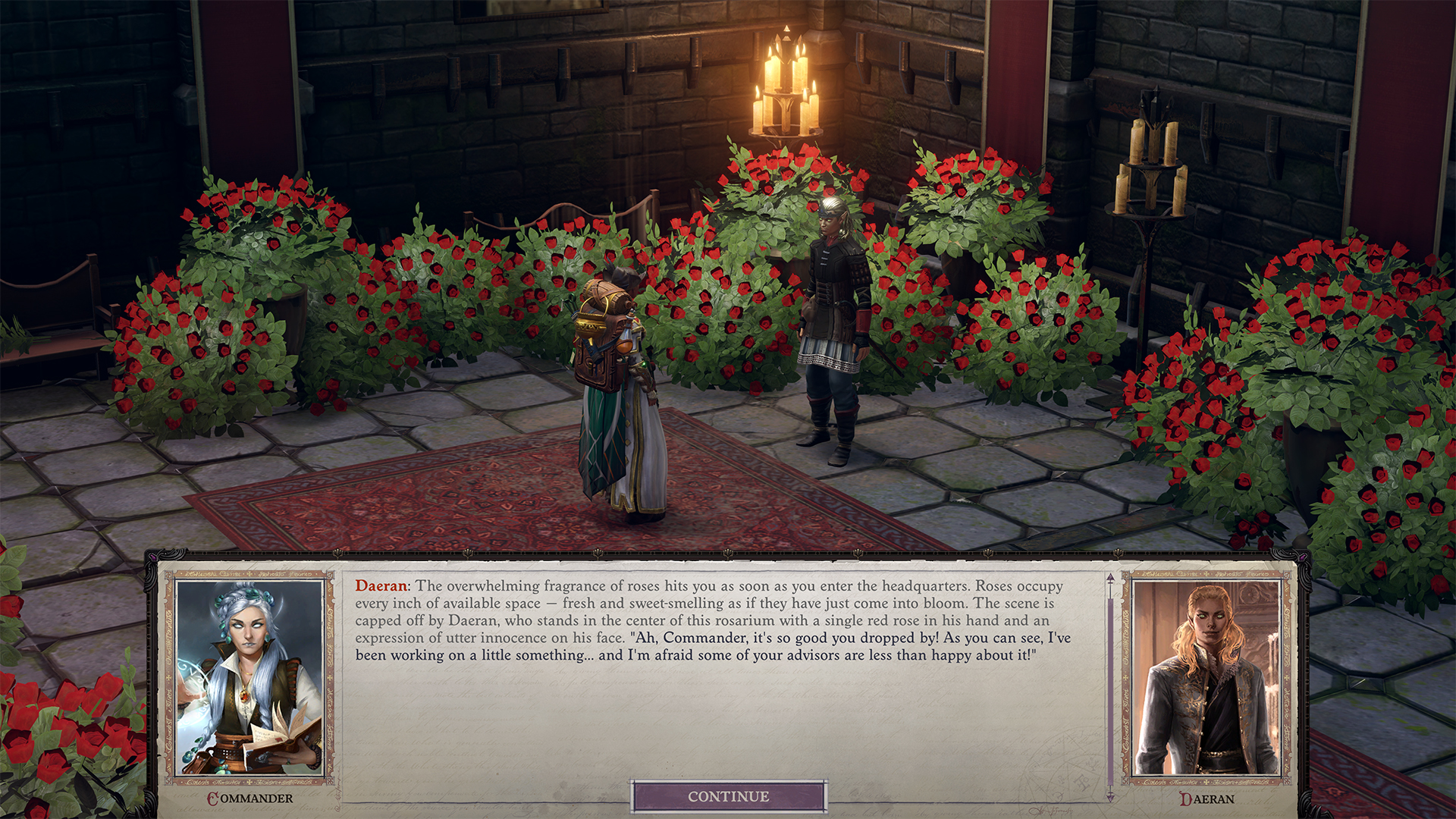
The picture shows Daeran's first romance event, a mandatory one. When he intercepts you right at your command headquarters in the city of Drezen, you go there to resolve important political matters, and bam—you find the hall literally covered in roses. And then he tells you that he didn't bring these roses here to impress you, but simply to create a pleasant aroma in the council chamber, to make it less gloomy.
Basically, everyone understands this is flirting.
It's important that in the first event, we most often include the ability to clearly and explicitly say either "yes, I'm interested in this romance" or "no, I'm not interested." We're often criticized for this, and people ask why the breakup phrases in our games are so blunt and rude. Well, unless you write it out loud and clear, some people won’t notice and then end up in bed with the character they don’t like, which would make them really offended.
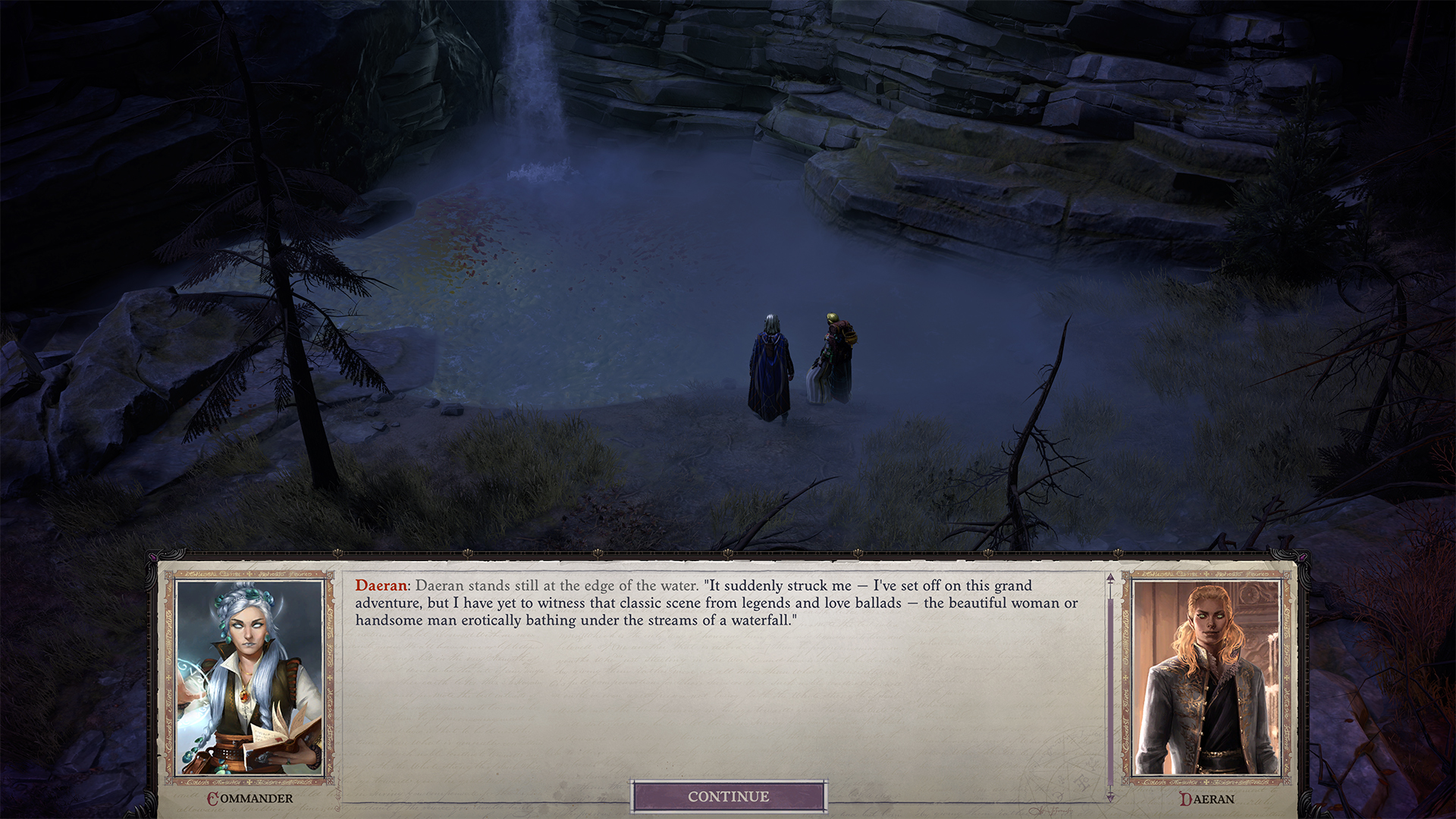
Here's an example of an optional event that our narrative designer Nika Arborti loves dearly.
She ran around in private messages asking all the level designers: "Do you have a waterfall on the map? No? Not even a small one? Can you add a waterfall here? Or there? What if I say 'pleeeese!" Because we needed an event involving bathing under a waterfall, an optional yet important and touching scene.
If you're walking with Daeran through the Worldwound, you might come across a location with a waterfall. There, Daeran suddenly tells you that every legend has a scene where a beautiful young man or woman is bathing in a waterfall, but he’s been wandering around for ages and has never seen anything like it. You can boldly jump into the water yourself, or knock him off, or tease him. This scene is one of the favorites among players. People really like it when you're walking along, and suddenly, at some point, a companion can stop you and talk to you about something. This is what makes optional romance events so special.
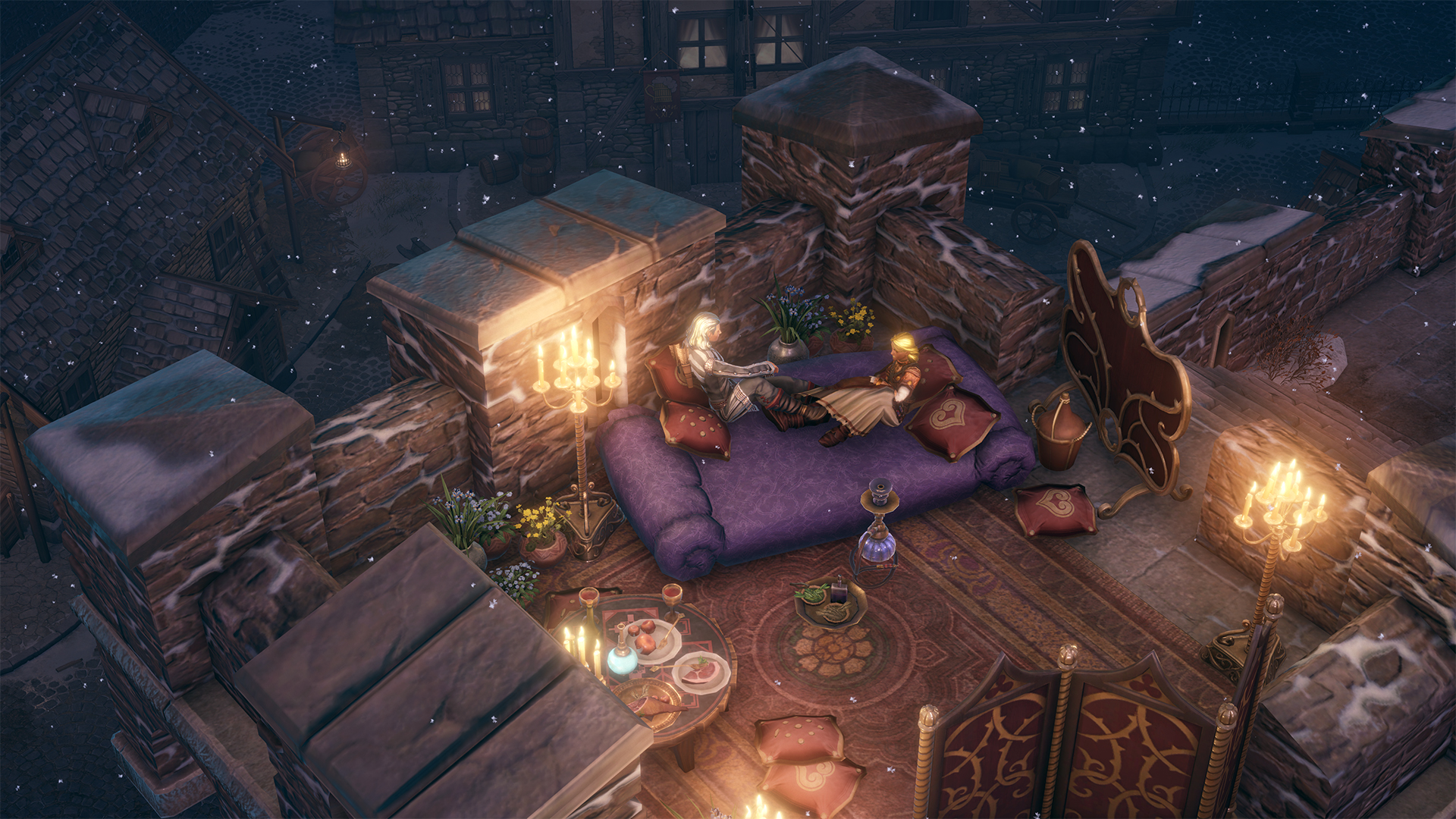
The third example is another mandatory event with Daeran.
While everything before was only light flirting and winking, this event finally secures your interest in each other. This is the so-called "not a date," where we confess our seriousness to each other.
Resolution, Farewell, and Jealousy
We’re left with three more types of romance content. Let’s name them:
When we complete all our romantic quests, there is a step that we call a resolution. It doesn't mean that the romantic content is over; it means that the main road is behind you, and what remains are all the little bows that emphasize that you're in a relationship.
In many games, if the romance ends, that's it. The character just stands there repeating one text line over and over again, and does nothing interesting. We do not want to do that. Resolution is an important emotional moment, but the content doesn't stop there; we try to keep adding all sorts of interesting things to keep you engaged and to let this relationship feel continuous.
Another important type of content is a farewell. It is not a romantic element in itself, but romance does creep in. As we approach the end of the game, it is important to let the players feel this moment, to wrap up the story lines and relationships, and to softly approach the end of the story. So there's always a bottleneck moment when companions talk to the player about the journey they’ve been on together. And along with the other things, there's also always a large branch of romance content.
There's also a jealousy event. It's more of a technical thing rather than artistic. This is a scene where, if you're trying to romance two or more characters, the game should stop you at some point and tell you to choose. We need this scene to make the relationships between characters seem more or less logical (you know, most people don't like it when you romance everyone that moves). We also need it in the game to properly flag things, to see which romance is progressing. Therefore, “jealousy” is an event that you get in the last third of the game, when everyone you've been romancing comes to you and gives you an ultimatum: “Choose one already!”
Of course, some characters are okay with the idea of polygamous romances, but there are a number of technical complications associated with it, so we’ll return to this topic later.
The Artistic Side
One of the main questions that stands before a writer who’s working on romantic content: how to write about love without it being cringeworthy?
The answer is simple—it is impossible.
Love, feelings, and relationships are, by definition, a cringy thing. Because it refers to our most vulnerable, tender sides, our soft belly. We don't show that to just anyone. To portray these tender matters well enough, we need to create that very “soft belly” of our character, and preferably not only in the one we will be romancing. We need to awaken these feelings in the player, and make them feel like opening up. What's even worse—as a writer, you have to feel it yourself and connect with your tender feelings and soft sides. It's simply impossible to do all this without cringing to some degree. Therefore, you need to stop thinking about it, stop being ashamed, and embrace the cringe.
The second important idea is that where one reader gets cringe, the other gets it right in the heart. A good romance is always made for the one whose heart it was meant to reach. When we're laying out the characters, we always consider who the romance is for. We always keep in mind that some players will love it, while others will hate it. Some will find it near and dear, while others will find it boring. So if you don’t like this character, look around, maybe another one will strike you.
There is only one alternative to this approach: to make a nice average waifu for everyone and for no one. It's a niche, really. It's better to have a default romanceable character like that, among other options. Otherwise, your player might end up in a situation where they think "Oh my god, I'm surrounded by crazy people, and I have no one to talk to." In fact, we had this situation early on during Wrath of the Righteous production. At some point we realized we had three female romanceable characters, and all three were cannibals. So we had to rewrite our characters urgently, removing all references to cannibalism from Arueshalae and somehow separating Camellia and Wenduag from this aspect, to make the difference between characters more obvious. As a result, Arueshalae was somewhat shifted toward the "average-pleasant" type, but fortunately, she didn’t become that type entirely.
The Secret Floor Method
For a character to be likable, they need to be engaging to read. Trying to force a character to fit the romance is a terrible idea, because then you'd have a romance without a character.
First and foremost, we create characters that are engaging in their own right. They're characters you want to interact with, keep in your party, and talk to. We are glad to see that players engage and pay attention to all the companions. But characters, their personalities, and their stories are all different, and we write some of them in such a way that romantic relationships aren't intended for the player. Yes, some people would want to romance them, but we won't allow it. That's simply because of how the character is written, that's how we designed them.
For example, our players wanted to romance Woljif badly. But there's no such option because Woljif is written as a younger brother. The relationship with him has always been written as non-romantic. Another example is Nenio. She would probably be desirable to many. She even has a nice small scene where, out of curiosity, she asks Daeran why so many people are interested in kitsunes romantically, and what exactly attracts them so much. To which Daeran honestly replies, "Well, the tail, of course!" That's wonderful, but the character's author has said a clear “no”; this character is asexual and must remain so. A romantic relationship with her would ruin her as a character.
But for most characters and their personalities, romances remain possible, and here we apply the “secret floor” method. Each companion has a personal quest that reveals their personality. Through that personal quest chain you explore a character quite deep, reveal who they are, learn some of their secrets, and see how they experience a specific character arc, changing along the way. A romance is a next level. A new floor, built above all that. It reveals things that the said character doesn’t tell anyone, even their friends. Even you, if you limit yourself to their personal quest. Not an easy thing to do, for a simple reason: it needs to be done in a way that, on the one hand, remains completely "in character". It shouldn't transform everything we previously knew about the character into a lie. And yet, the character still needs to surprise, to reveal themselves in their own strange, unexpected way, without ruining the entire structure.
Of course, this method has a downside, as well. Sometimes a character without romance can be less developed than a character with one, because everyone has a single floor, while the romanceable characters have two. We were wondering what can be done about that—perhaps we should create additional content for non-romanceable characters. This way some will be just companions, while others will be best friends. Or romances could be made within the companion quest budget. Which sounds like a terrible idea, as it would lead to content cuts. Ultimately, we haven't solved this problem yet. Indeed, romanceable companions end up with twice the character.
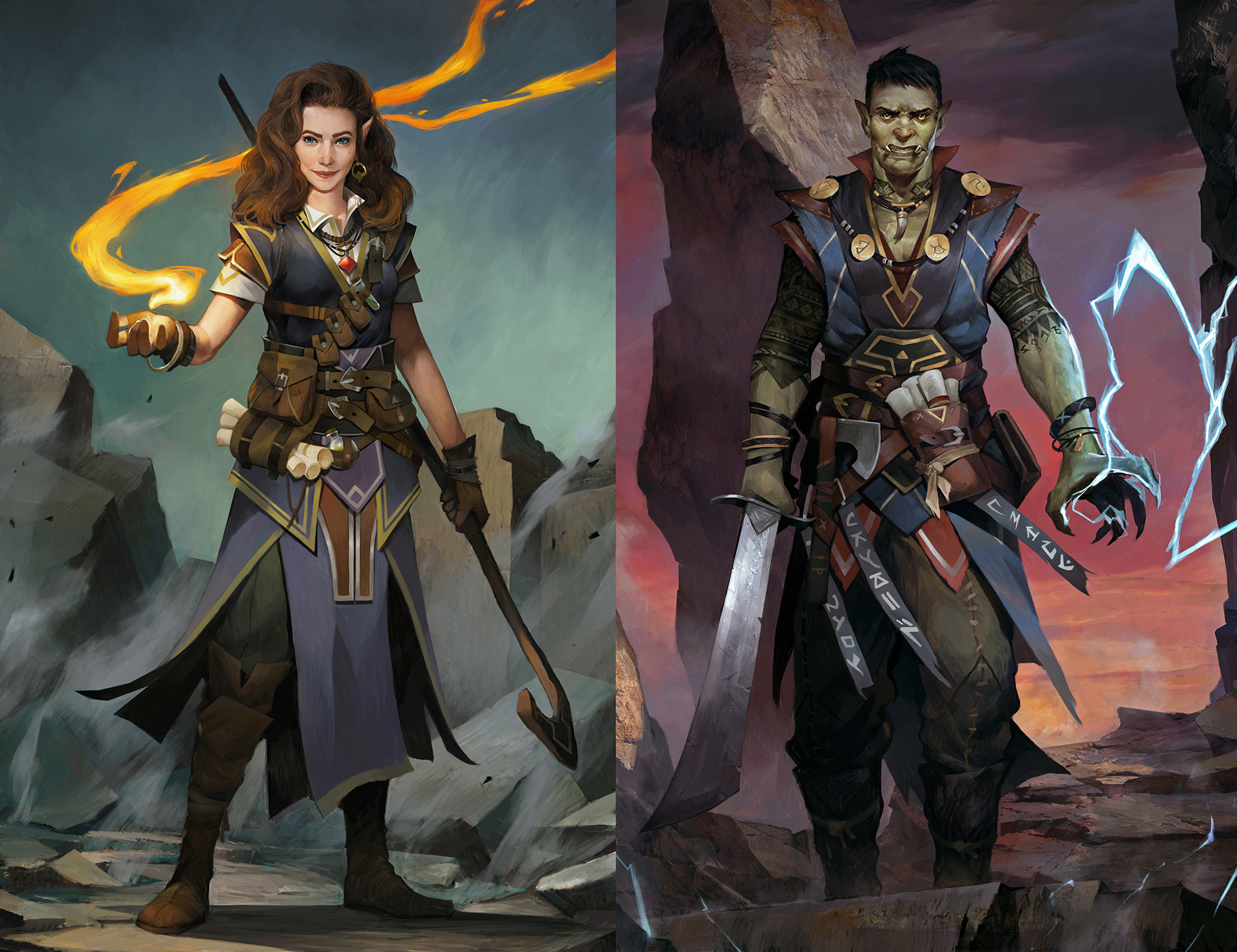
But let’s return to the “secret floor”—here’s an example, how we did it in Pathfinder: Kingmaker.
We had these two characters, Octavia and Regongar. The idea was simple: among other romanceable characters in the companion roster, we wanted to add a female and male character who would be both bisexual and polygamous. This is a couple that you can either join as the third partner, or break up by getting involved with one of them, regardless of your character's gender.
First Floor: what do we learn as we interact with them during the companion quest?
This is a couple who barely survived slavery and fought for their freedom. Their relationship also has an interesting dynamic—it's a love between a good and an evil character. Octavia is Chaotic Good, while Regongar is Chaotic Evil.
The dynamic itself is interesting, and their companion quest has the potential to push one of them into Chaotic Neutral, but there's another layer built on top of that, which we get to know if we start romancing them. We learn that both of them are incredibly clueless for one simple reason. Their backgrounds made them tough, capable of surviving anywhere and overcoming anything. But that life forced them to mature too early, and the price they paid was emotional immaturity. And in romantic relationships, these characters (who are around 20) experience things that, in a healthier case, a person usually lives through and works through at the age of 11-15. For Octavia, it's the fear of losing control. She's terrified that if she gets close to someone, they'll enslave her again and take control. For Regongar, it's the opposite: the fear of abandonment, of being unwanted.
So these two fears work like a self-destructive machine, feeding each other. Regongar tries to get Octavia to prove she needs him, calling her "my Octavia," which just makes her angry, taking it as possessiveness. If we don't interfere, they'll somehow work it out on their own. But if we do, this conflict unfolds before our eyes, and we can either escalate the situation to the point of breaking up and taking one of them for ourselves, or we can harmonize this conflict and live happily together as a trio.
All of this exists in the characters, but unless you romance them, you'll only see glimpses of what's really going on.
As another example, the hidden floor of a character from Pathfinder: Wrath of the Righteous, Arueshalae. The main idea is “a romance with an alien.” Among our companions, there is a demoness. On the one hand, her story is tragic: she's done much evil and is now trying to atone for it. On the other hand, she's in an alien, incomprehensible world; she doesn't really understand how the human world works, and this greatly affects her. For example, she has a quirk: she misuses metaphors because she doesn't know what she's talking about, resulting in some bizarre phrases. When we get to romance her, we discover that for her, the inner world is as new, unexpected, and full of mysteries and secrets as the outer world. So we get a character who, as a former succubus, knows just about everything about sex, but knows just about nothing about the emotional side of relationships and is trying everything for the first time. This is also connected with the fact that she develops her own world of dreams. During her journey, she learns to see dreams and learns to dream.
Taking Advantage of CRPG Mechanics and Variability
A romance can be tied to the game events in different ways, and it can include some gameplay elements, which are not always directly romantic. As an example, we had a romance event built on the “book event” mechanics, which isn't about love at all.
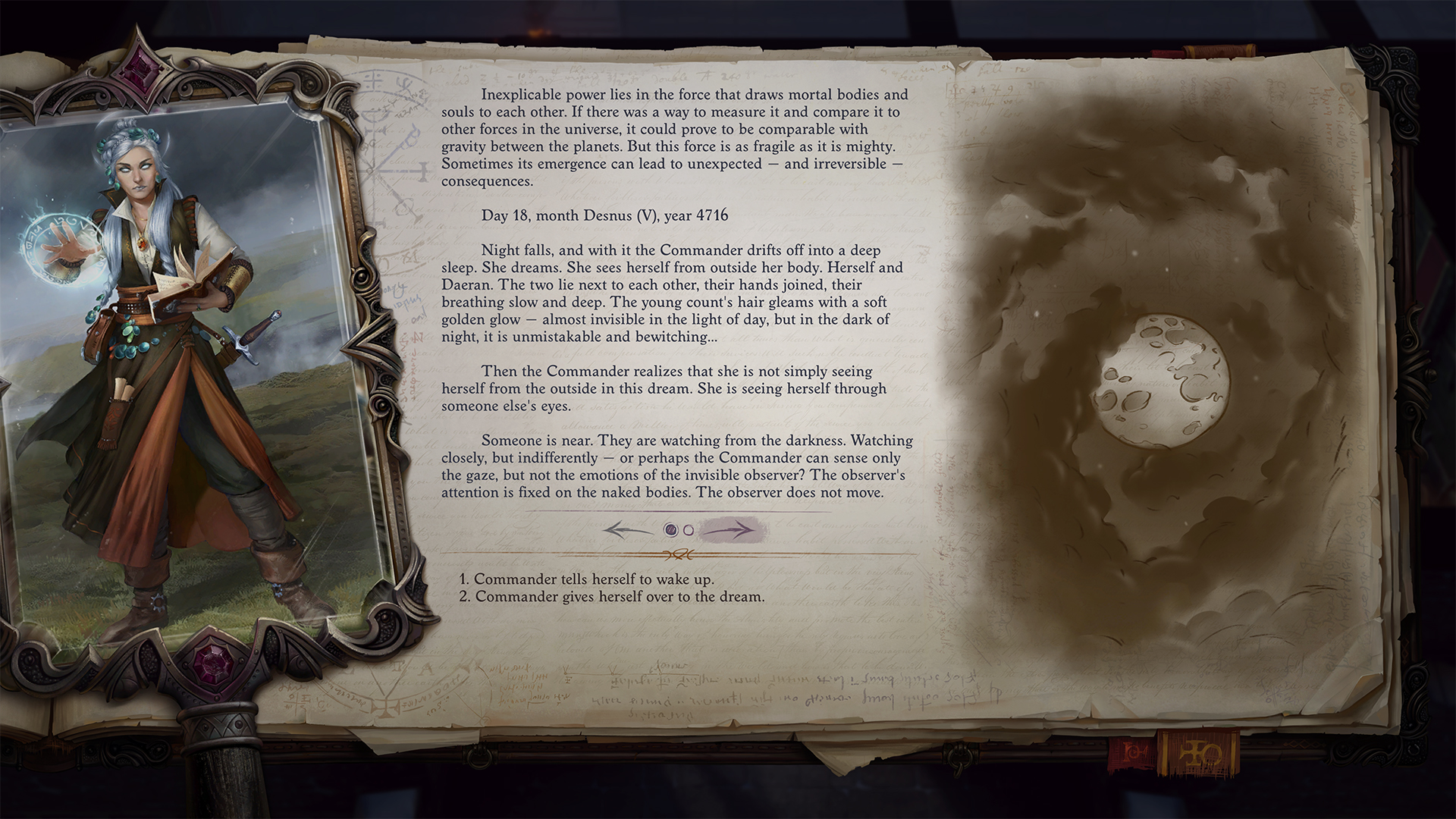
This romanceable character has their own unexpected “secret floor”—a "subtenant", a terrible chthonic creature, which sits inside him and wants to get into our world through him. If you're just following his quest, then at some point you'll find out about it, and then you'll have a quest to outlive this creature. But if you start romancing this character, the creature pops into your head and hints clearly that you should back off. The screenshot shows an example of a “book-event” that is designed as a looping nightmare. If you click the options “tell yourself to wake up” or “give yourself over to the dream,” you will continue to spin around in this nightmare, and it will be quite difficult to escape from it. It's just a cool little gameplay episode that relates to the romance and helps you get a deeper look at your companion.
While this isn't a universal rule for romances, it's a good example of how different CRPG mechanics and variability can be used in various ways to make a character's story richer.
The Writing Process
Interaction Between Character and Player
Let’s make it clear:
-
A character does not exist outside the story
-
A romance does not exist without relationships between two (or more) people
-
Romance – is answerlists (which means the whole variety of the dialogue lines for your main character)
Just as an RPG's plot is about the player’s choice, a romance is about interaction. You can create the best companion in the world, and the most amazing dating setup for them, but if you don't let the player interact with them, develop their character, and make any choices, your romance will likely fail.
How do we build interaction with the character? There are so-called "routes" of romances. Those who play visual novels are familiar with them. “Routes”, or “types of dynamics” are different types of relationships with a character that you can build, depending on your preferences. Every romance has different dynamic types between the player character and their love interest, and usually more than one. For example, in Dragon Age 2 there are “romance based on friendship” or “romance based on rivalry”. We do something similar in our games, but we don't do it systematically. We don't multiply routes across all companions, but we create them individually for each one.
The classical formula for planning routes for romances is “1+2+1”. Of course, it is not applied just everywhere, because systematicity for such an individual thing as romance is not very good. But this is a certain basis that we use quite often.
The first 1 is for the fail route: how to behave with your love interest to fail the romance.
Why do we need this route? If there's no chance of losing, there's no chance of winning, and therefore, there's no satisfaction in knowing you did everything right and successfully completed the romance.
We create some “traps” that players can fall into and ruin the romance. Although, we usually don't make them too cruel. Take Arueshalae as an example. She's a succubus who is trying to change, so it’s only natural if you start to pester her with sexual propositions right away, she'll end the romance at some point. It's not always about romantic behavior; it could be that a companion doesn't want to continue the relationship if you're completely ideologically incompatible with them
The “2” in our formula: these are two equal routes that differ in roleplay but don't require extra effort (like the final “1” in the formula, explained next). You should have some variety in how you interact with your companion within the romance. For example, a marriage of convenience. You can consciously tell your companion "We're together because we're right for each other," and that builds the first type of dynamic. Or you can say, "I love you, I need you, let's build real feelings," and progress in the relationship with the second type of dynamic. You can imagine how many pairs of routes can be out there.
These two main routes should be equivalent, not feel like a failure, but offer noticeably different content. RPGs are games of choice, and you can't have a linear romance, with a few rare exceptions.
That said, the two main routes don't require any particularly "correct" romance play or a particularly deep understanding of your companion. Don't be a jerk, don't take the first route, which will obviously fail you in the romance, and you'll get through it more or less normally and get your romance.
The last “1” is True Love, an achievement romance that requires not only completing the romantic quest chain, but also playing it well. This usually requires you to really understand your companion or put a lot of effort into developing these relationships. You've done more, and you've gotten more.
An important note: True Love isn't necessarily the cutest or most positive route. It's the most complex and interesting ending to a romance, not the sweetest one. It may not be so “true” or even not “love” actually, but it's the most interesting story that concludes the romance.
All in all, this doesn't just apply to romances—we generally design quests this way. We usually come up with one challenging, super-rewarding quest option. Then we make two routes where you can resolve the situation normally by participating in the events without overexerting yourself. Finally, we make a clear fail path.
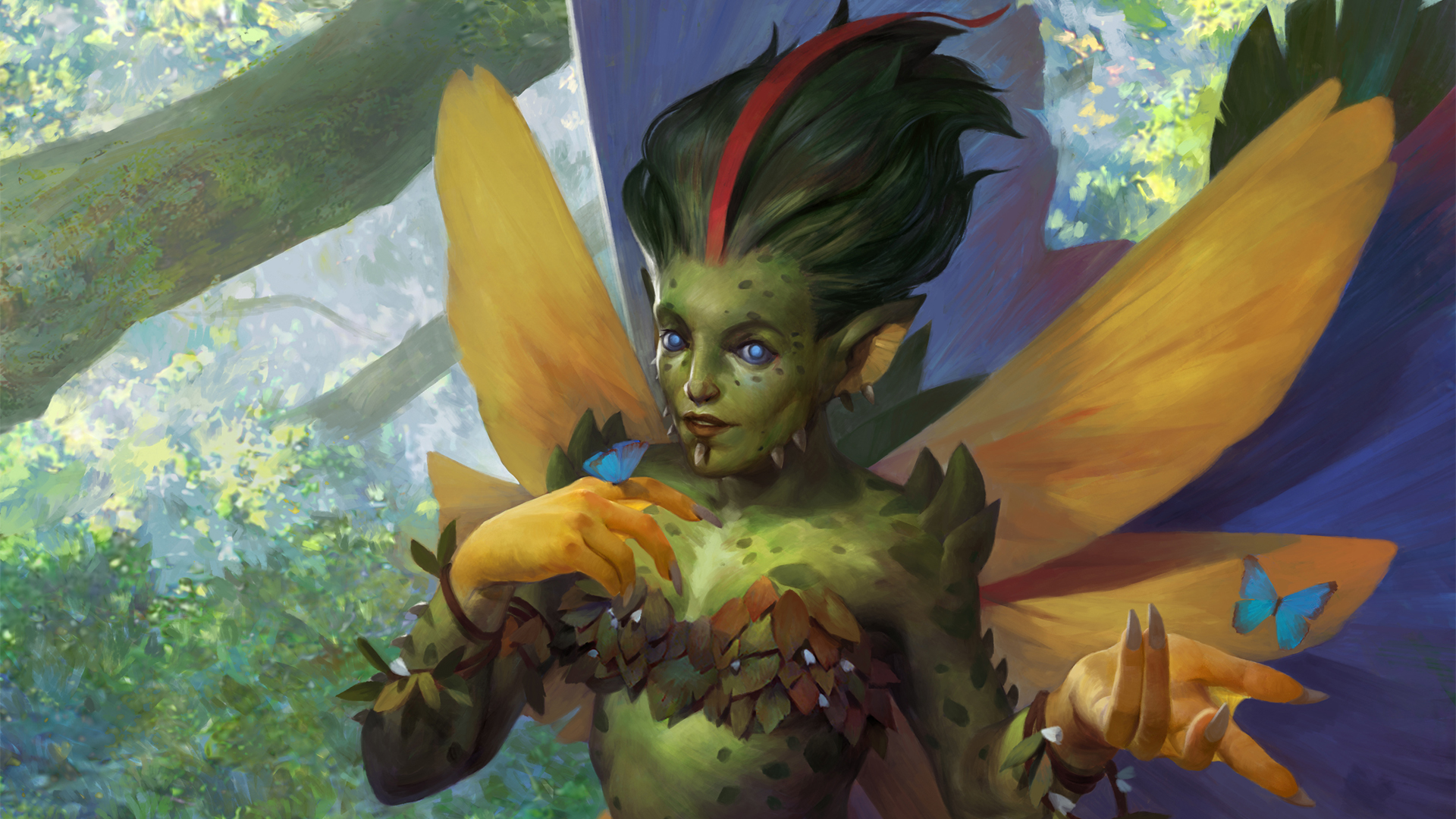
As a sophisticated example of a “True Love ending”, we’ll take the secret romance from our first game, Pathfinder: Kingmaker.
In our game, you can romance the main villain. Yay! The best kind of romance.
This beautiful fey woman, Nyrissa, is the main villain in Kingmaker. She's cursed to destroy kingdoms, one by one. She gained this curse for a reason: in the distant past, she wanted to create her own magical domain, her own kingdom. The gods of the fey world did not like it. Her subjects were killed, her kingdom was destroyed, and she herself was cursed and sent on this thousand-year quest to do the same to other people. You can save Nyrissa by the power of love. This is our very complex true love ending. Moreover, she only has a difficult one route romance, and it's designed in such a way that any missteps lead to failure.
At some point, she comes to you and tells you that she loves you. But to fulfill the curse, she needs you to let her destroy your kingdom. If you instantly agree, say "I love you too" and give her your kingdom, she ends the affair. At this point, you can roll Game Over, and also forget about the "true love" ending. The correct response is to say, "I love you, but I won't betray my people, and I will fight for my kingdom to the end." Because that's what Nyrissa herself did in her time—she fought to the end. She finds this kind of henpecked behavior unpleasant, so she ends the romance.
We know some people were furious about this. They thought you always had to agree with the character you're trying to romance to succeed, and they were failing at this point. But we believe, on the contrary, it's a wonderful scene, because it reveals her character so well. It shows a line she'll never cross, and it shows that the character has agency.
Polyamory — and Why You can’t Romance Everyone
Players sometimes ask us “why can’t you romance everyone at once?”
Well, there is a big problem: combinatorics. We don't want to make bad novels, and we don't make them cheap. We work according to the principle "better nothing than mediocre."
What does this mean?
In some games you can theoretically romance multiple characters, and you can date them all at once, but they will all act as if the others do not exist. We don't do that. If we want to create a polyamorous romance (like we did in Kingmaker), that means the characters interact not only with us, but also with each other and everyone else.
When done properly, a polyamorous relationship becomes a complex system. This is evident even in that jealousy dialogue we mentioned above. This dialogue is one of the most complex in the entire game, because it can involve any two, three, or even more romanceable characters at once. This is a dialogue in which there isn't even a consistent, pre-determined interlocutor; even something as basic as this isn't obvious. Naturally, writing such a dialogue is painful. Adding someone else to the equation is even more painful. We learned this for ourselves when we added Ulbrig to the game.
Now imagine this:
2 characters = 3 routes.
3 characters = 7 routes.
4 characters = 15 routes... and so on.
It turns out that, say, just 4 characters with the possibility of polyamory, in any combination, is many times more difficult to create than all the companion quests combined. So, unfortunately, if we want to add polyamory to the game, we have to limit it somehow. It is impossible to include each and every companion combination to this system. However, this does not mean that all other characters should reject the idea with indignation. Each character will have their own attitude toward it and will respond to such proposals in their own way. For example, the aforementioned Daeran, when offered polyamory, responds, "No, I'm not against it, but everyone else doesn't want it!"
That's how it works—as much as we'd like to experiment in this area, the problem with polyamory in role-playing games is the complexity and cost of development, which are growing exponentially.
Veils & Details
Being an author, in some cases, you can freely show explicit scenes in your text, game or other creation. In other situations, you may want to not demonstrate things so openly. It all depends on many factors: the artist’s vision, the idea, genre, style, some particular artistic purposes, or even publishing purposes (like an intended rating). If you decide to choose the second path, here are two classical techniques that you can use to create a deep romantic feeling in the scene, without showing sex directly.
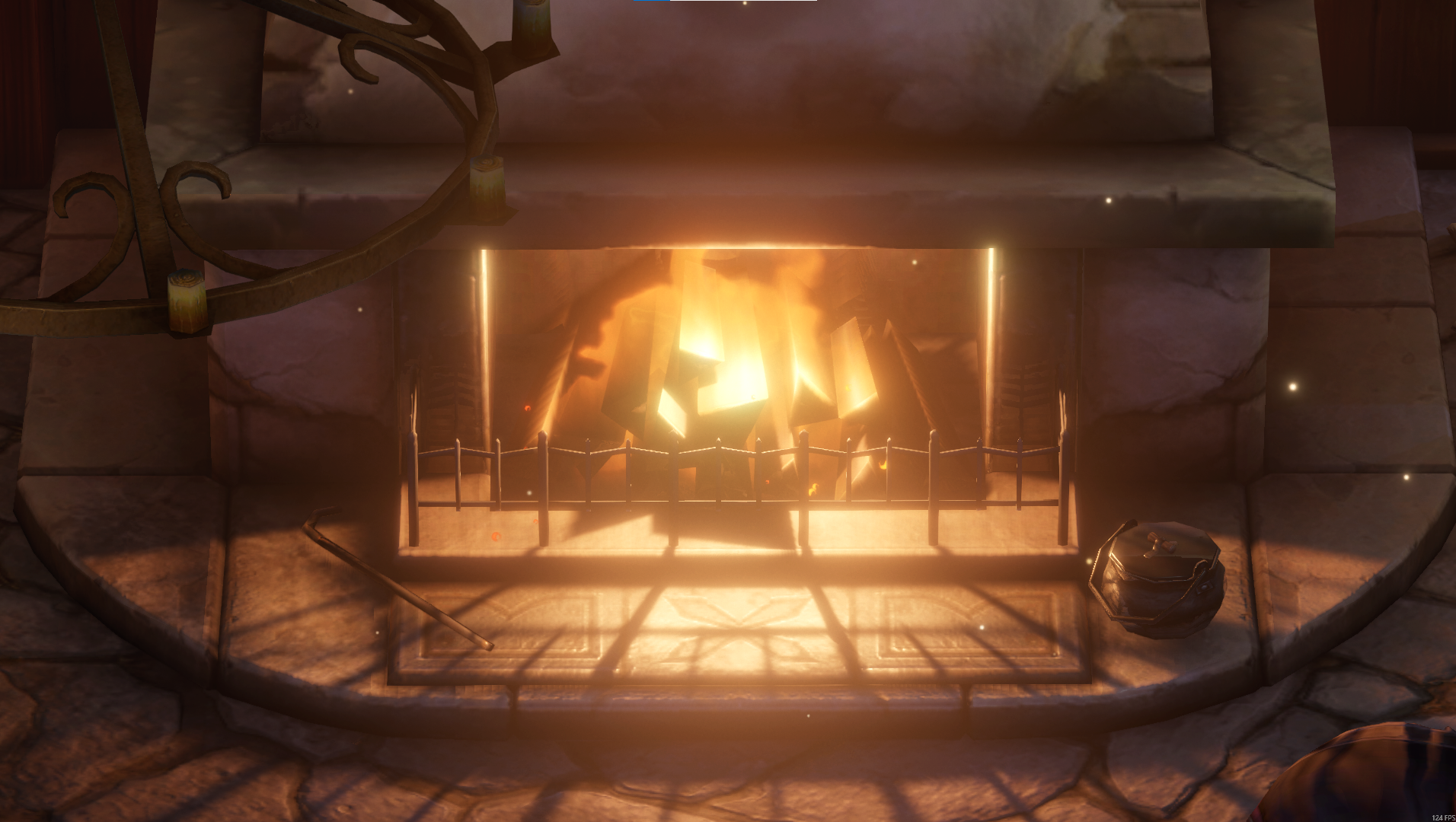
As we've already established, romance and intimacy are often cringeworthy to some degree. How do movies and works of fiction address this issue? In the picture, you see a fireplace. It's there for a reason. For a long time, it was common in Hollywood to begin erotic scenes with dreamy music and hugs, then turn the camera to the fireplace. The trope was used so often that, at some point, it became a meme and was mocked in comedies. But there's a reason this technique emerged and was used so often. Because what's shown bluntly and directly is often not at all romantic and even creates unnecessary awkwardness, while what's left behind the scenes and left unsaid has a special charm and is perceived as quite romantic.
The same technique is used in literature. Let's take an example from the timeless classic, "The Divine Comedy", the story of Paolo and Francesca (who went to hell for it, but, as they say, it was worth it). It's one of the best erotic scenes in the history of classical literature.
We read for delectation of a day
how Love brought Lancelot into its thrall.
We were alone, suspicions all at bay.
Our eyes were drawn together, I recall,
at certain points; both faces then would drain—
but one point only we had not foreseen.
When reading how that high ennobled swain
had kissed the very smile of his queen,
the one from whom I ne’er will part again—
he placed his mouth on mine, both quivering.
That book’s a Galeotto and its author:
we read no further, nothing more at all.”
The story ends with “we read no further, nothing more at all”, and there is absolutely nothing more to write, as the readers understand everything.
And now, the exact opposite advice.
We can hide erotic scenes in the fireplace, as well as details of romantic conversations that don't need to be reproduced literally. It's enough to start, and then the player will figure out what exactly they and their favorite character said to each other.
Or we can do the opposite and show one detail in super-close-up.
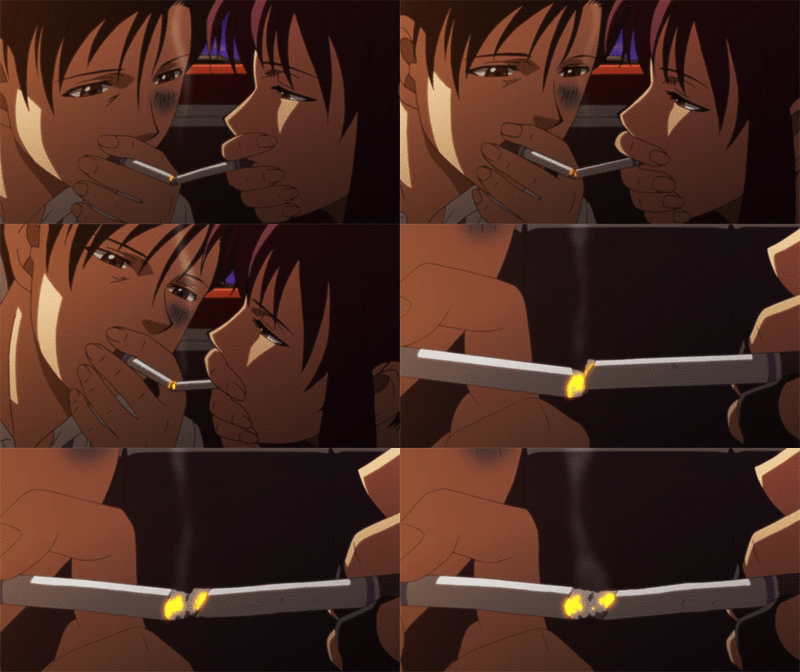
The illustration depicts a kissing scene from the anime Black Lagoon. The scene is beautiful because it's a kiss without actually kissing. Two characters, who clearly have sexual tension between them, sit next to each other after a hard day. One lighting a cigarette from the other's cigarette. It's a beautiful kiss, revealing everything without even a kiss. We're hiding a scene, which we don't want to show or describe, behind a single detail shown in extreme close-up.
There's another clever trick here. When we read a book, our vision is engaged. Our gaze skims the page. In a game, we listen to music and look at the graphics. However, our brain works in a special way, triggering certain senses based on the mere description of a familiar taste, smell, or sensation. If you say "lemon," our brain will remember what it is, our mouth will become slightly sour, filling with saliva. If you depict a small detail brightly and prominently enough, the corresponding receptor in the viewer's brain will be activated. Moreover, the smaller and more intense the detail, the better this works.
You can test this yourself and use it with confidence. This advice applies not only to romantic plots but to any of your texts. Say, the hero enters a room; be sure to mention the smell, or how damp the air is. Or that a metallic taste appears in the mouth. The trick is that appealing to different senses—smell, taste—all these things momentarily activate the corresponding centers in the player's brain. And all these centers are located close to the memory center.
We're not neurologists, so don't ask us for advice on brain surgery, but the fact is that memories associated with taste, smell, or tactile sensations are stored in the brain much better than others. A single scent can trigger memories from your distant childhood. So, such a tiny detail in your story can become the nail on which you hang the entire scene, and it will be remembered.
Here's another example from Pathfinder: Wrath of the Righteous: Arueshalae has "hot, dry palms." These palms are mentioned only a couple of times in the game, but they became a meme on the forums, with players posting for a long time, "...and then the love and the palms begin." It was a clever twist because the text perfectly incorporated a vivid, tactile sensation.
The moral is that an awkward scene can be hidden not only behind a curtain or a "fireplace," but also behind a close-up. Moreover, this close-up can become your calling card, firmly imprinting the scene in the player's memory, transforming it from a mere scene into a lived and felt moment.
As we already mentioned, hiding intimacy is not a necessity; these are just a couple interesting techniques, a way to write romances that you may choose. And if you don't have such restrictions, then just make scenes hot and have fun!
Of course, this is far from all we could tell you about the art of romance writing, or the art of narrative design in general. These topics are too broad and lead too far down the rabbit hole. In this article, we touched on the main points. These were mere glimpses behind the scenes which, we hope, have given you fresh insight into the thing we all truly love—computer games.
by Nika Alborti, Arseniy “Thai” Krymov, Elizaveta Krymova